
Karma is one of the most talked-about concepts in Indian philosophy, yet it is often misunderstood. Many people believe karma is simply about “good deeds bring good results” and “bad deeds bring bad results.” While that is partly true, the deeper meaning of karma is far more profound.
According to ancient Indian wisdom, karma is the law of cause and effect. Every thought, word, and action creates an impression that shapes our future experiences. The good news is that karma is not a life sentence. Through awareness, right action, and spiritual growth, it is possible to reduce the burden of past karma and create a more peaceful future.
Let’s explore how ancient teachings suggest we can clear our karma and live with greater freedom.
What Is Karma?
The Sanskrit word karma simply means “action.” Every choice we make leaves an imprint on our mind and influences the direction of our lives.
Ancient scriptures describe three types of karma:
- Sanchita Karma – The accumulated karma from past actions.
- Prarabdha Karma – The portion of karma currently unfolding in this lifetime.
- Kriyamana (Agami) Karma – The karma we create through our present actions.
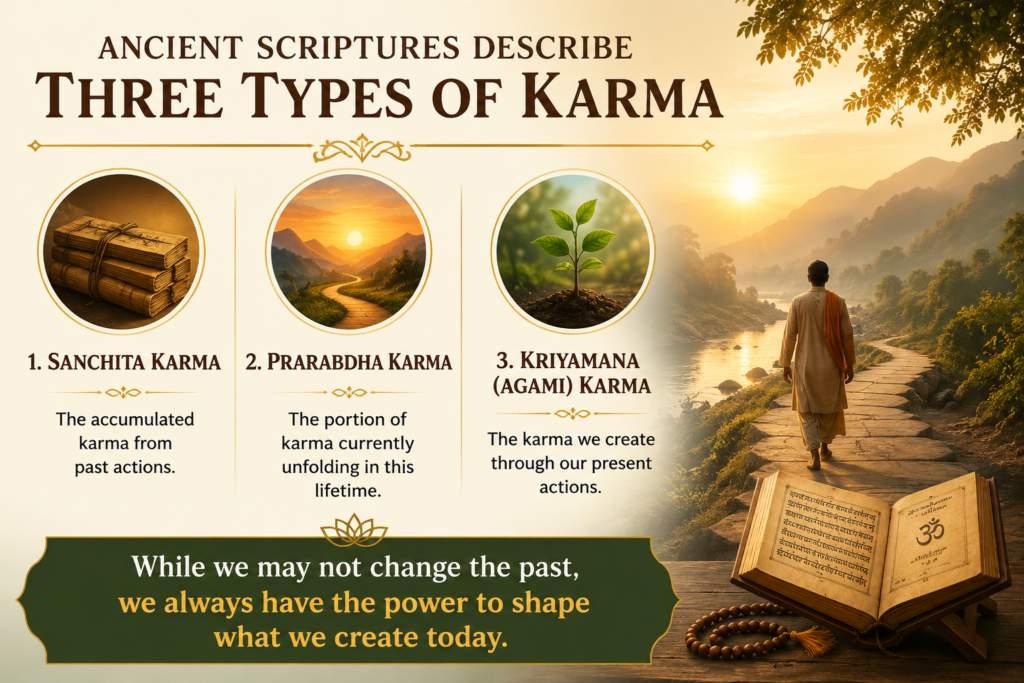
While we may not change the past, we always have the power to shape what we create today.
1. Become Aware of Your Actions
The first step toward clearing karma is awareness.
Many of our habits are automatic. We react with anger, jealousy, fear, or pride without noticing. The more unconscious our actions, the more karma we create.
Mindfulness helps us pause before reacting. Instead of acting out of emotion, we begin responding with wisdom.
Simple daily practices like meditation or quiet reflection help us become more conscious of our thoughts and choices.
2. Practice Selfless Service
One of the most effective ways to reduce karmic burden is through selfless service, known as “seva.”
Helping others without expecting praise, recognition, or rewards purifies the mind and reduces attachment to the ego.
Acts of kindness do not have to be grand. They can include:
- Helping someone in need
- Volunteering your time
- Supporting a worthy cause
- Sharing knowledge
- Offering genuine compassion

When actions come from love rather than personal gain, they create positive inner transformation.
3. Forgive and Let Go
Holding onto resentment keeps us emotionally tied to painful experiences.
Forgiveness does not mean approving harmful behavior. It means choosing not to carry anger that continues to affect our own peace.
Many spiritual traditions teach that forgiveness frees both the heart and the mind, allowing old emotional patterns to dissolve.
Sometimes, the person who benefits most from forgiveness is us.
4. Speak Truth with Kindness
Words carry energy.
Harsh speech, gossip, lies, and unnecessary criticism can create suffering for ourselves and others.
Ancient wisdom encourages speaking truth with compassion.
Before speaking, ask yourself:
- Is it true?
- Is it helpful?
- Is it necessary?
- Is it kind?
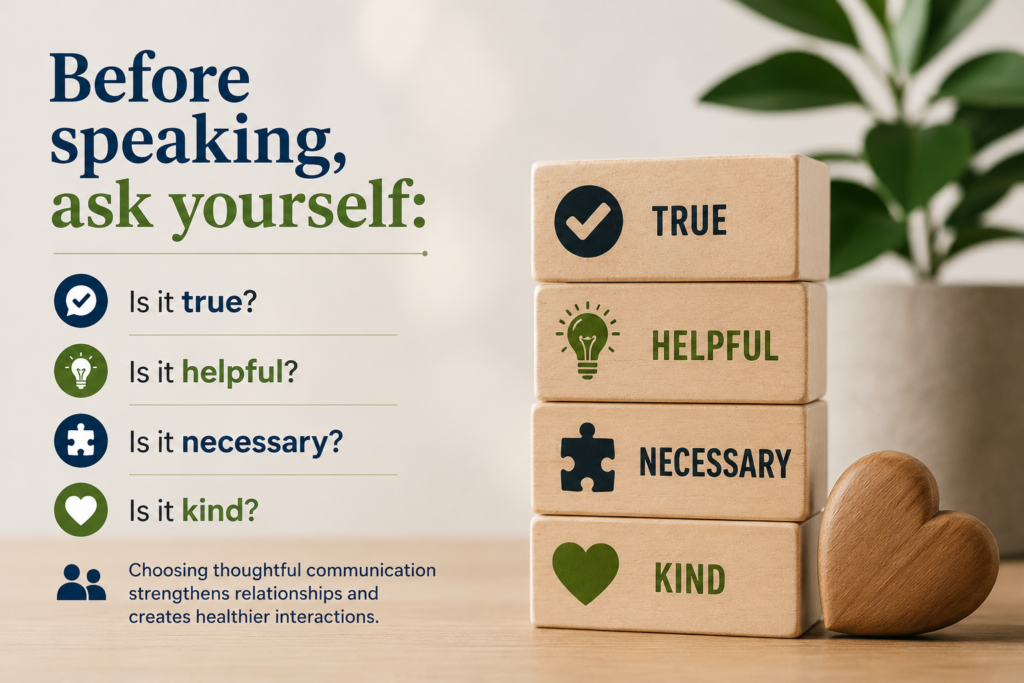
Choosing thoughtful communication strengthens relationships and creates healthier interactions.
5. Let Go of Attachment
Much of our suffering comes not from events themselves but from attachment to outcomes.
The Bhagavad Gita teaches the principle of Karma Yoga—perform your duty sincerely without becoming attached to the results.
This does not mean becoming passive. It means giving your best effort while accepting that not everything is within your control.
Living this way reduces anxiety and creates inner freedom.
6. Practice Daily Meditation
Meditation helps calm the mind and weakens old patterns of fear, anger, and desire.
As awareness deepens, we become less reactive and more intentional in our actions.
Regular meditation can help:
- Increase emotional balance
- Improve self-awareness
- Reduce stress
- Encourage compassion
- Break negative habits
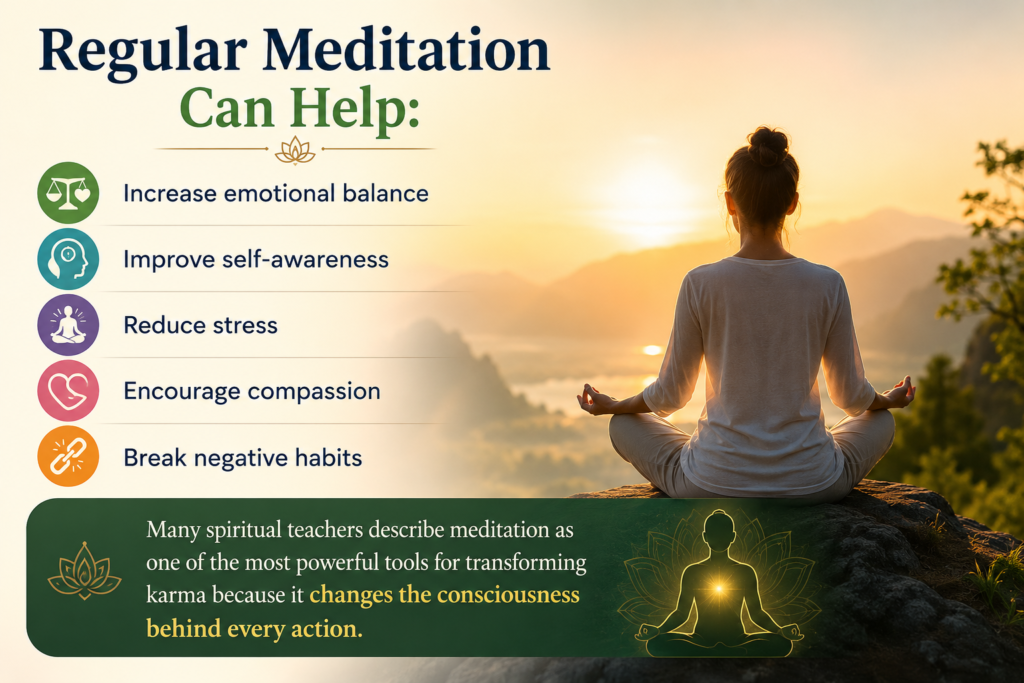
Many spiritual teachers describe meditation as one of the most powerful tools for transforming karma because it changes the consciousness behind every action.
7. Live with Gratitude
Gratitude shifts attention from what is missing to what is already present.
Instead of complaining about life’s challenges, grateful people learn from them.
Keeping a gratitude journal or simply reflecting on three things you appreciate each day can gradually transform your mindset.
A grateful heart naturally creates more positive actions.
8. Take Responsibility
Blaming others keeps us stuck.
Taking responsibility does not mean blaming ourselves for everything that happens. It means recognizing that our response is always our choice.
When we accept responsibility for our actions, we stop repeating the same patterns and begin creating better ones.
Personal growth starts with honesty.
9. Choose Compassion Over Judgment
Everyone carries unseen struggles.
Responding with compassion instead of judgment softens the heart and reduces conflict.
Simple acts like listening without interrupting, showing patience, or offering encouragement can positively influence both your life and the lives of others.
Compassion transforms relationships and creates a more peaceful inner world.
10. Live According to Your Values

The greatest way to clear karma is to stop creating unnecessary negative karma.
Live with integrity by aligning your daily actions with your deepest values.
Choose honesty instead of deception.
Practice generosity rather than selfishness.
Let patience guide your actions instead of anger.
These everyday choices gradually reshape your character and your future.
Does Karma Mean Everything Is Predetermined?
No.
While past actions may influence present circumstances, ancient Indian philosophy emphasizes free will. Every moment offers a new opportunity to make conscious choices.
Your current actions have the power to change the direction of your life.
Karma is not about punishment—it is about learning, growth, and becoming more aware.
Final Thoughts
Clearing karma is not about performing one grand act or following a secret ritual. It is a lifelong process of becoming more conscious, compassionate, and responsible.
By practicing mindfulness, forgiveness, selfless service, meditation, gratitude, and ethical living, we gradually reduce harmful patterns and cultivate inner peace.
The essence of karma is simple: every action matters. When our thoughts, words, and deeds arise from wisdom and kindness, we create a life that reflects those same qualities.