
Stress and anxiety can affect how we think, breathe, and move through our day. Sometimes, even after waking up, you may feel a heaviness in your chest or a sense that something is not going right.
While there are many ways to support emotional well-being, ancient yogic practices can also offer simple and accessible techniques that can easily be incorporated into everyday life. For example, one such practice is mudra, a specific hand gesture that has traditionally been used alongside meditation and yoga. In addition, mudras are often practised as a way to bring greater awareness, focus, and balance to the mind and body.
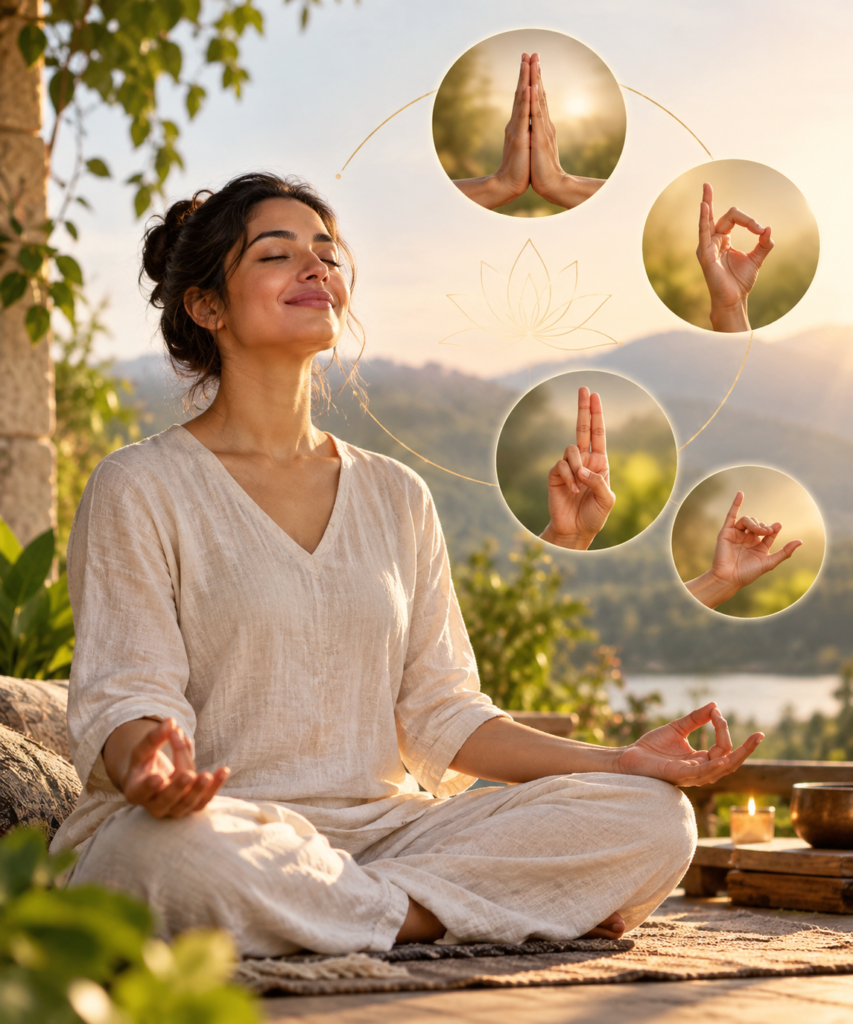
Mudras are simple, require no equipment, and can be practised almost anywhere.
In this blog, we explore three powerful mudras: Ganesh Mudra for strength and surrender, Abhaya Mudra for courage, and Kuber Mudra for abundance and positive intention.
What Are Mudras?
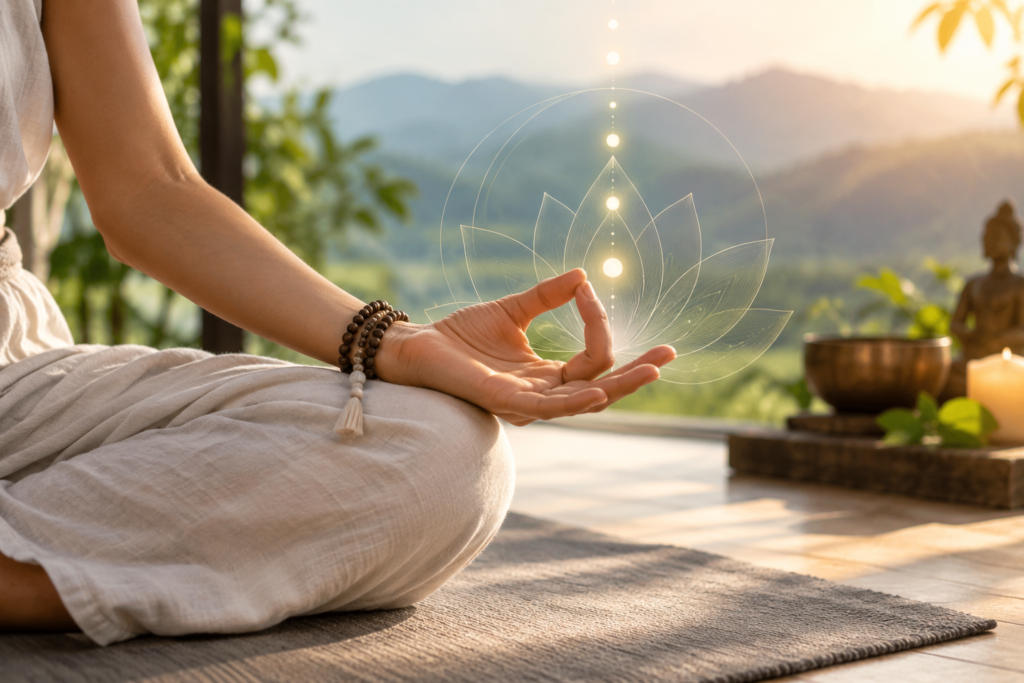
The word mudra refers to a symbolic hand gesture or position used in yogic and meditative practices. Moreover, in traditional yoga, mudras are believed to influence the flow of energy through the body and support concentration during meditation.
Different mudras are associated with different intentions. Additionally, some are traditionally practised for calmness, while others are connected with courage, focus, grounding, or abundance.
The important thing is not simply making the hand position. Your breath, awareness, posture, and intention are also part of the practice.
Let us look at three simple mudras you can explore.
1. Ganesh Mudra: A Simple Practice for Stress and Anxiety
Have you ever woken up feeling anxious, stressed, or emotionally heavy?
Ganesh Mudra can be incorporated into a quiet meditation practice when you want to cultivate a sense of inner strength and surrender.
To practise it, sit comfortably with your spine straight. Bring your hands in front of your chest. Place the left hand facing forward and hold it with the right hand. Interlock the fingers and create a gentle pulling action between the hands.
The pull should be slight and comfortable, never forceful.
Once you are settled, close your eyes and bring your attention to your breathing. However, you can continue the practice for around 10 minutes, using a mantra or quiet meditation according to your practice.
The idea is to combine the physical gesture with focused awareness.
But, rather than trying to control everything happening around you, use the practice as an opportunity to pause, breathe, and surrender.
Why Practise Ganesh Mudra?
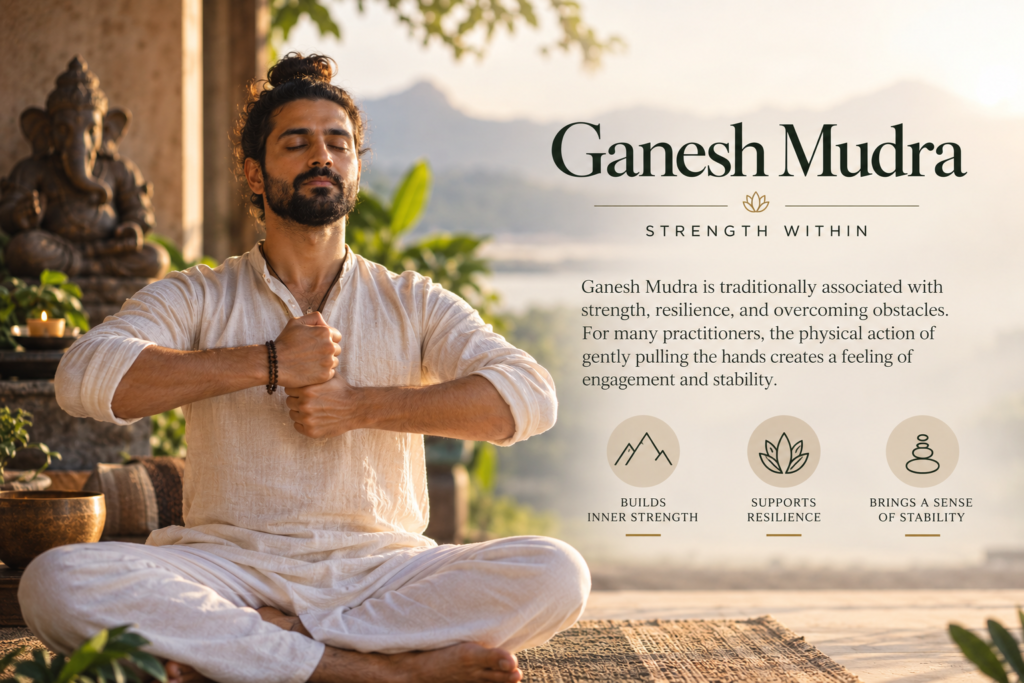
Ganesh Mudra is traditionally associated with strength, resilience, and overcoming obstacles. For many practitioners, the physical action of gently pulling the hands creates a feeling of engagement and stability.
Additionally, if you are feeling overwhelmed, taking ten quiet minutes for yourself than you can also create valuable space between you and the stress of the moment.
2. Abhaya Mudra: The Fearless Heart
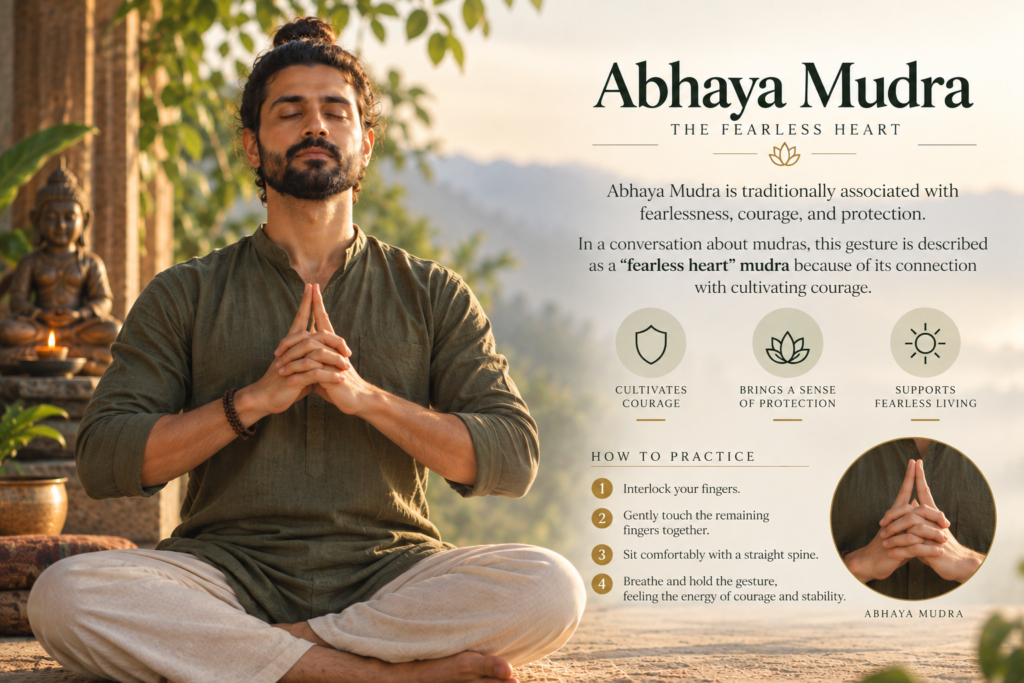
Also, the second practice is Abhaya Mudra, which is traditionally associated with fearlessness, courage, and protection.
However, in discussions about mudras, this gesture is also described as a “fearless heart” mudra, owing to its connection with the cultivation of courage.
To practise it, a specific hand position is created, with the fingers interlocked and the remaining fingers gently brought together. Once the hands have been positioned, a comfortable seated posture should be adopted, with the spine kept straight.Close your eyes and bring your attention inward.
You can use this practice when you want to reconnect with a feeling of confidence and inner courage.
Fear can sometimes influence the way we make decisions, communicate, or respond to difficult situations. A mindful practice like this can serve as a reminder to pause rather than react immediately.
The Connection Between Mudras and Awareness
Traditional yoga practices often connect mudras with nadis, the subtle energy pathways described in yogic philosophy.
The position of the hands, combined with breathing and sustained attention, becomes part of a larger meditative practice.
However, whether you approach mudras from a traditional yogic perspective or simply use them as a mindfulness ritual, the practice encourages you to slow down and become more aware of your body and mind.
3. Kuber Mudra: Cultivating Abundance
Who doesn’t want a little more abundance in life?
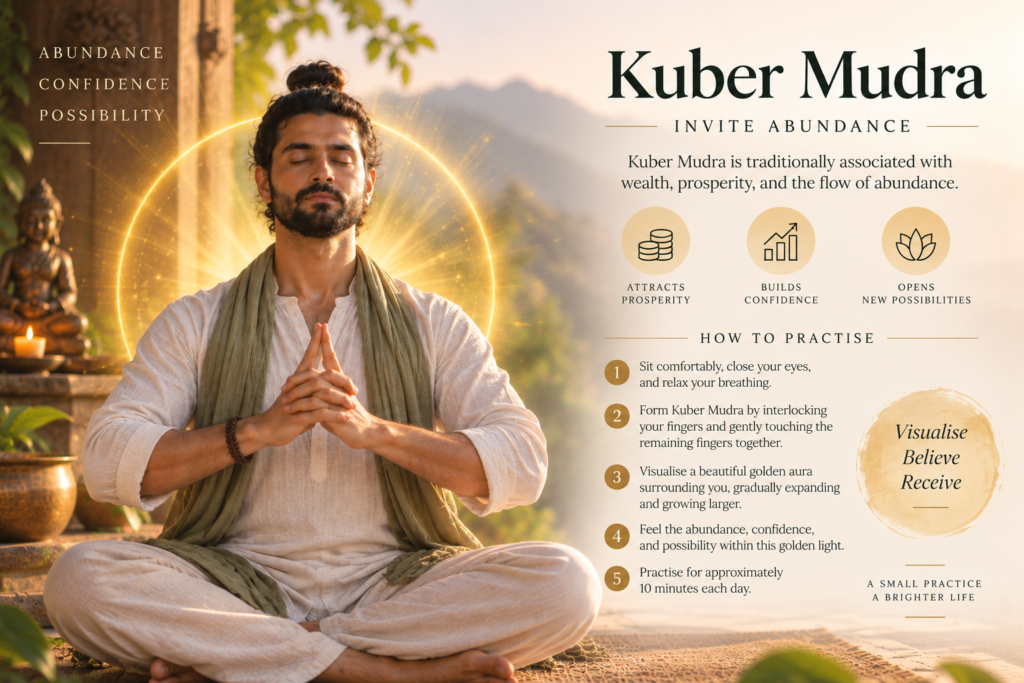
Also, Kuber Mudra, also known as Kubera Mudra, is traditionally associated with abundance, intention, prosperity, and manifestation practices.
To practise it, bring your hands into a comfortable position. Fold the last two fingers inward and bring the thumb, index finger, and middle finger together.
Sit comfortably, close your eyes, and relax your breathing.
Then comes an important part of the practice: visualisation.
Imagine yourself surrounded by a beautiful golden aura. Instead of keeping the image static, visualise this golden light gradually expanding around you.
Feel it becoming larger.
Allow yourself to experience the feeling of abundance, confidence, and possibility.
You can practise Kuber Mudra for approximately 10 minutes each day while maintaining this visualisation.
The purpose of the practice is not simply to think about money. It can also be used as a way to develop a positive relationship with your intentions, goals, and sense of possibility.
How Long Should You Practise Mudras?
Consistency can make a simple practice easier to integrate into your daily routine.
You can begin with 10 minutes a day. Choose a quiet place, sit comfortably, keep your spine upright, and avoid forcing your hands or fingers into uncomfortable positions.
You can practise in the morning, during meditation, or whenever you need a few moments of stillness.
Most importantly, approach the practice with patience. Mudras are traditionally used as part of a broader yogic and meditative discipline rather than as an instant solution.
Bring Mudra Practice Into Your Daily Life
From Ganesh Mudra for strength and surrender to Abhaya Mudra for courage and Kuber Mudra for abundance, these simple hand gestures can become meaningful additions to your meditation routine.
You do not need a complicated setup. All you need is a few minutes, a comfortable seat, conscious breathing, and your attention.
The next time you feel stressed, uncertain, or disconnected, take a moment to pause.
Sit quietly.
Breathe.
Bring your hands into a mudra.
And give yourself ten minutes to reconnect with your inner space.
Sometimes, a simple practice can be the beginning of a powerful shift.