
What does real power look like?
Is it measured by the size of your bank account, the length of your security detail, or the fear you strike into the hearts of your rivals.
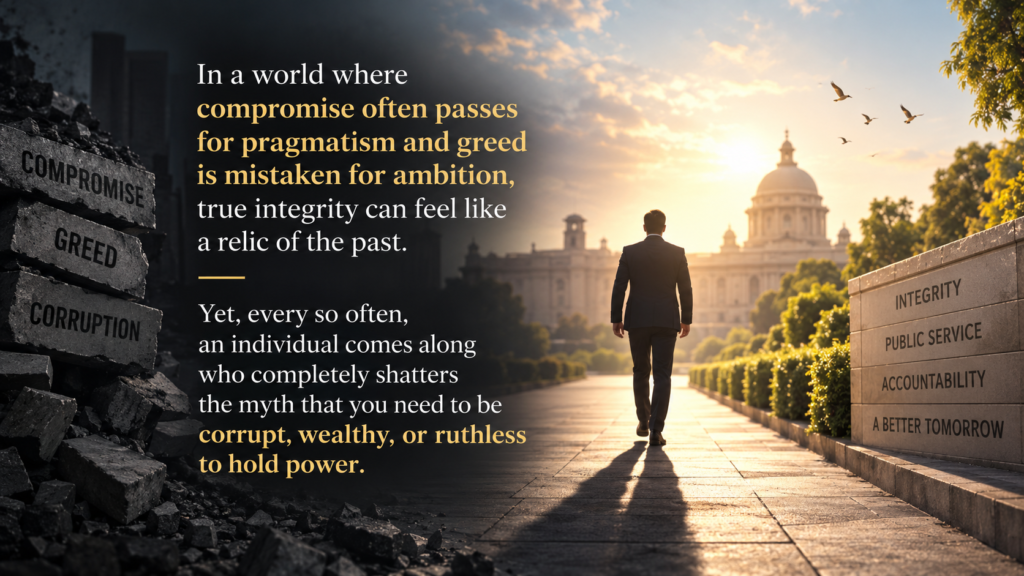
In a world where compromise often passes for pragmatism and greed is mistaken for ambition, true integrity can feel like a relic of the past. Yet, every so often, an individual comes along who completly shatters the myth that you need to be corrupt, wealthy, or ruthless to hold real power.
Tukaram Mundhe, an upright Indian Administrative Service (IAS) officer, is living proof of that standard.
Known across India for his uncompromising administrative principles and unwavering commitment to public service, Mundhe’s life and career offer a masterclass in modern ethics. His story challenges everything we think we know about leadership, influence and the pursuit of power.
The illusory pursuit of corruption and greed.
Why do people choose corruption? why do individuals sell out their principles, betray public trust, and step over others?
At its core, corruption stems from a deep-seated insecurity-a burning desire for more money, more influence, and higher position. Many believe that bending the rules is the only shortcut to the top. They trade away their moral compass in exchange for a temporary seat at the table.

However, this shortcut carries a heavy, invisible tax.
When you choose corruption, you dont just accumalate material wealth; you also accumulate bad karma, public resentment, and deep dissatisfaction. The power gained through political manipulation or illicit wealth is fundamentally fragile. It relies on coercion, systematic fear, and brute force.
The moment the authority wanes or the money runs dey, the loyalty disappears. You are left with a legacy built on sand, surrounded by individuals who served your title, not your character.
Integrity as a Force Multiplier: Lessions from Tukaram Mundhe
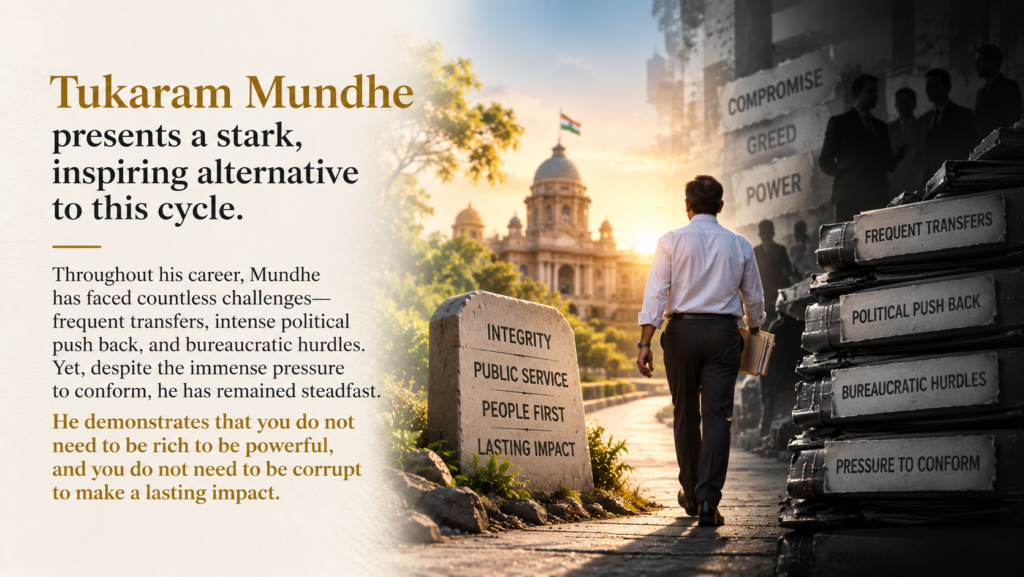
Tukaram Mundhe presents a stark, inspiring alternative to this cycle.
Throughout his career, Mundhe has faced countless challenges-frequent transfers, intense political push back, and bureaucratic hurdles. Yet, despite the immense pressure to conform, he has remained steadfast. He demonstrates that you do not need to be rich to be powerful, and you do not need to be corrupt to make a lasting impact
Following Your Dharma Attracts Positive Karma
When you perform your duty-your dharma-with honesty and conviction, you generate a positive cycle of karma. Authenticity acts as a natural magnet. By refusing to compromise your values, you align your actions with a purpose far greater than personal gain.
Respect and Love Outlast Fear
Politicians and corrupt officials often crave respect, but what they command is usually fear. Fear lasts only as long as your power does. In contrast, an honest, genuine person earns authentic respect, genuine love, and heartfelt admiration. This connection cannot be bought, sold, or stripped away by an official transfer order.
The ultimate difference in power dynamic
Consider this stark contrast in public leadership:
Power from Brute Force: A corrupt leader may sit surrounded by security guards, yet remain constantly vulnerable to the deep resentment of those they have wronged.

Power from Unyeilding Integrity: An honest public servant earns an enduring layer of protection-the loyalty of the people. While a corrupt figure might face widespread public hostility, an upright officer like Tukharam Mundhe earns millions of citizens willing to stand by them.
That is the true definition of authority. It is not enforced from the top downthrough systemic oppression; it is granted from the ground up through public trust.
Redefining Success in the Modern World
We live in a culture that frequently equates success with material excess and institutional status. We are told to network strategically, play politics, and adjust our ethics to fit our ambitions.
Tukaram Mundhe’s legacy proves that a good soul, an honest mind, and an unbending backbone are the most potent tools you can possess.
“True power does not come from what you take from the world; it comes from what you give to it through pure, principled action”
When you choose honesty, you choose a path of peace and enduring strength. You step out of the rat race of greed and into the domain of genuin leadership. You show the world that ethics are not a luxury for the week, but the ultimate strength of the brave.
How to cultivate principled leadership in your own life
You dont need to be an IAS officer or a high-ranking official to live out these principles. You can apply the Tukaram mundhe ethos to your daily life, career, and community.
- Priortize Purpose Over Position: Focus on doing excellent work right where you are , rather than worrying about the titles or praise you might recieve.
- Refuse Small Compromises: Corruption rarely starts big; it begins with tiny ethical shortcuts. Guard your standards fiercely in everyday choices.
- Build Relationships on Trust, Not Utility: Treat people with fairness and respect rather than using them as stepping stons for advancement.
- Stand Firm Under Pressure: When doing the right thing creates short-term resistance, remember that real integrity is proved under friction.
Conclusion: Choose the power that endures
Ultimately, we all face a fundamental choice in our personal and professional lives: Will we pursue the cheap, temporary power of shortcut and self-interest, or will we build the enduring, unshakable power of personal integrity?
Greed may promise immediate rewards, but it delivers long-term anxiety, hostility, and bad karma. Honesty may require a harder path, but it builds a life defined by honor, peace and genuine impact.
Be the person who proves that goodness is not weak, that honesty is not outdated, and that a life led with integrity remains the most powerful force in the world.