
A diagnosis that changed everything.
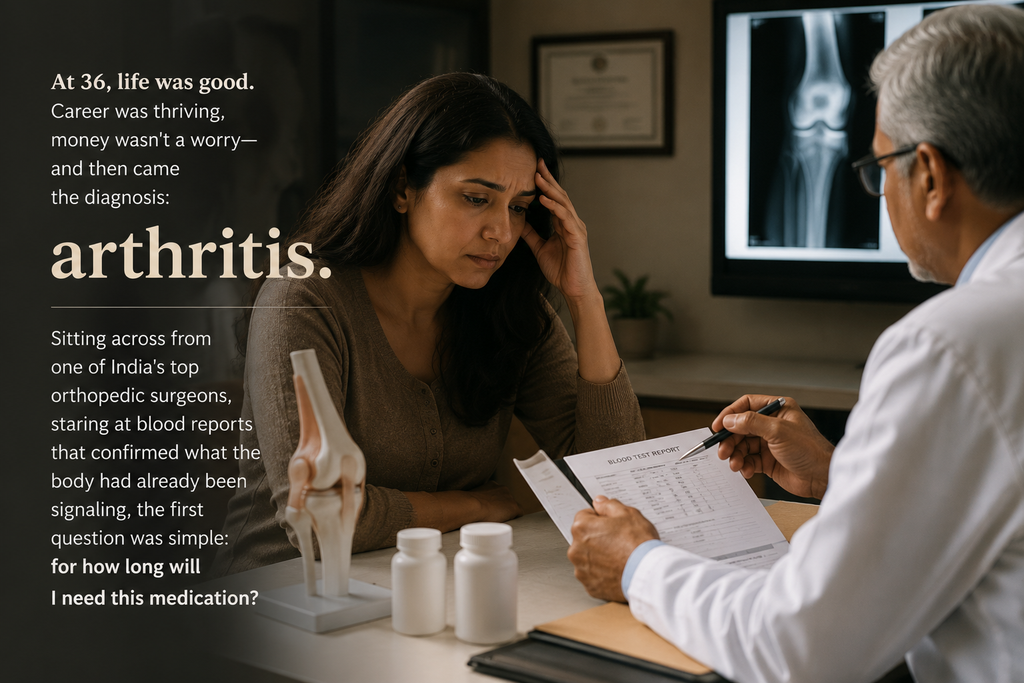
At 36, life was good. Career was thriving, money wasn’t a worry—and then came the diagnosis: arthritis. Sitting across from one of India’s top orthopedic surgeons, staring at blood reports that confirmed what the body had already been signaling, the first question was simple: for how long will I need this medication?
The answer wasn’t simple at all. “For the rest of your life,” the doctor said.
That single sentence became the turning point of an entire health philosophy. There had always been quite a bit of skepticism toward allopathic medicine—a belief that pharmaceuticals had their place (a car accident, a broken bone, a genuine emergency) but weren’t the default answer to everything. A lifetime of never even reaching for a paracetamol for a headache or fever made the idea of committing to permanent medication feel deeply wrong.
“Yoga was off the table. Running was no longer possible. Even tennis had to be given up.”
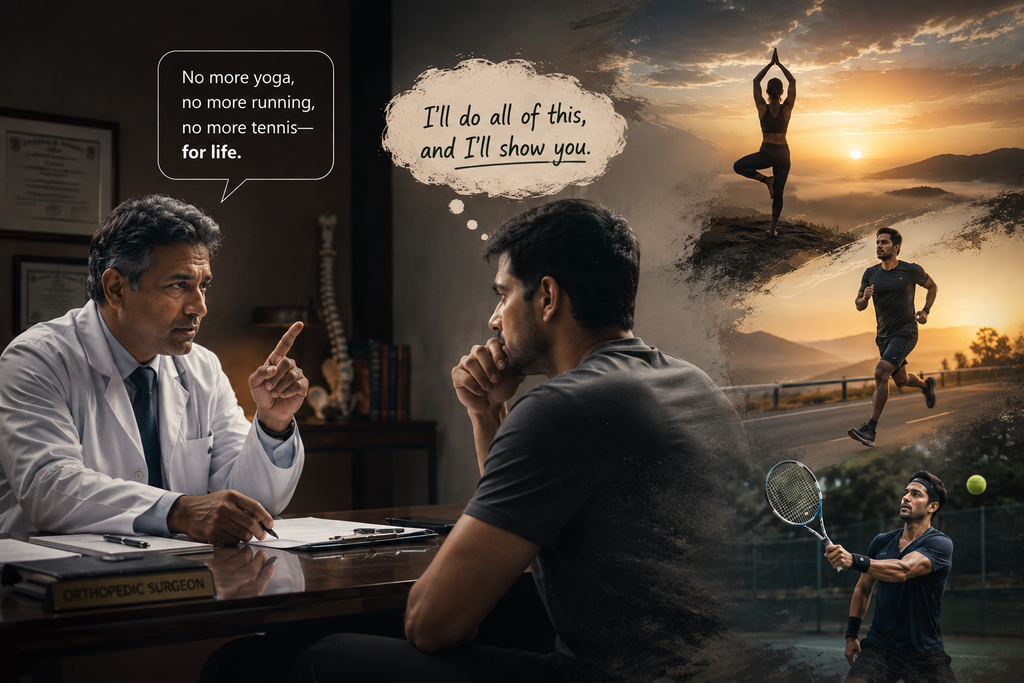
The doctor’s next words were the real gut-punch: no more yoga, no more running, no more tennis—for life. The response to that was almost instinctive: laughter, followed by a quiet vow. I’ll do all of this, and I’ll show you.
That defiance wasn’t denial. It was the spark that launched a genuine search for alternatives—one that would eventually span nearly two decades.
Discovering the Power of Panchakarma
The search led straight into the world of traditional Indian medicine and, specifically, into Ayurveda. A 30-day stay at an Ayurvedic pharmacy and wellness center in Coimbatore became the starting point of real healing, built around Panchakarma, Ayurveda’s signature detoxification and rejuvenation therapy.
What made it so effective wasn’t just the treatments themselves but the deeper understanding that came with them. In Ayurveda, practitioners view arthritis as an autoimmune condition linked to an aggravated Vata dosha.
Understanding Doshas: The missing piece modern medicine never offered.
Ayurveda organizes the body around three doshas—Vata, Pitta, and Kapha. Once practitioners identified arthritis as a Vata imbalance, everything changed. Instead of managing symptoms indefinitely, it became possible to actually live according to the principles that keep Vata in balance.
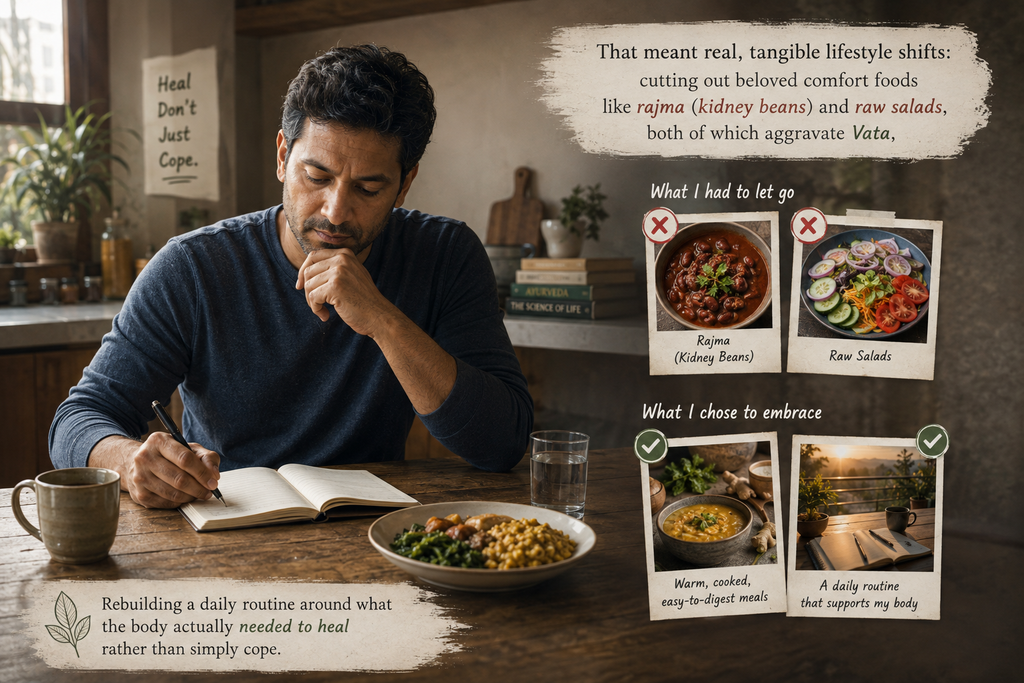
That meant real, tangible lifestyle shifts: cutting out beloved comfort foods like rajma (kidney beans) and raw salads, both of which aggravate Vata, and rebuilding a daily routine around what the body actually needed to heal rather than simply cope.
This wasn’t a quick fix. It became an ongoing education—one that continues nearly 19 years later, through books, research, and podcasts from Ayurvedic practitioners and doctors around the world. Today, that knowledge gets shared everywhere from Rotary Club lectures to conferences and conversations across China, Russia, and Europe—always with one disclaimer: I’m not a doctor. I am a patient who healed, and I am sharing what worked.
Beyond Arthritis: Reversing “Incurable” Eczema
Arthritis wasn’t the only chronic condition in the picture. Eczema had also been diagnosed and dismissed by India’s top dermatologists as something to manage, not cure. Steroids could control it, they said, but it would never go away.
Today, there’s zero eczema. Not even the scars remain.
That’s the real proof point behind this journey: Ayurveda isn’t a placebo or a trend. It’s a functioning system of medicine that works across every age and stage of life because its principles were refined over more than 5000 years of observation.
Why Ayurveda feels more trustworthy than ever-changing “modern” advice.
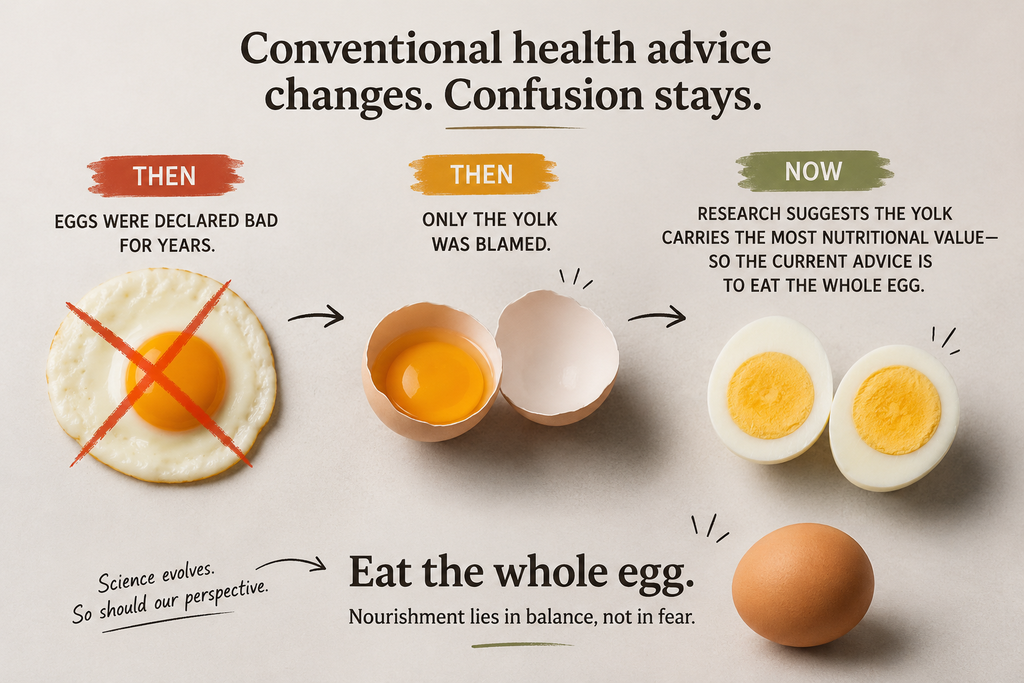
One of the most frustrating parts of conventional health advice is how often it contradicts itself. Eggs were declared bad for years. Then only the yolk was blamed. Now research suggests the yolk actually carries the most nutritional value—so the current advice is to eat the whole egg.
This isn’t an isolated example. It’s a pattern: new studies, new papers, new reversals, year after year. Ayurveda, by contrast, has stayed remarkably consistent. Its guidance was set thousands of years ago and hasn’t needed a decade of research grants to course-correct itself. It tells you plainly what works, what doesn’t, and what rules to follow—and the long-term outcomes speak for themselves: Living well past 100, staying mobile, staying independent, and going only when it’s truly time to go.
The Takeaway
This isn’t a story about rejecting modern medicine outright—it’s a story about questioning a life sentence, refusing to accept “manage forever” as the only option, and doing the research to find something that actually heals rather than just controls. Nineteen years, one reversed arthritis diagnosis, and a fully healed case of “incurable” eczema later, the results make a compelling case for looking beyond the first prescription handed across the desk.
Ayurveda isn’t a quick fix or a trend—it’s a 5000-year-old system built on understanding the body’s natural balance. And for at least one person, it turned a life sentence into a full recovery.