
In today’s fast-paced world, many people eat while standing, scrolling on their phones, or rushing between meetings. But in Indian culture, eating has always been more than just satisfying hunger. It is a mindful practice that connects the body, mind, and soul. One of the most fascinating traditions is sitting on the floor and eating with our hands.
While these practices may seem old-fashioned, modern science is beginning to support many of their benefits. This ancient Indian wisdom offers valuable lessons for healthy living, mindful eating, and overall well-being.
The Ancient Tradition of Sitting on the Floor While Eating
For centuries, Indian families have traditionally eaten while sitting cross-legged on the floor, a posture known as Sukhasana. This simple sitting position is common in yoga and meditation because it naturally promotes relaxation and awareness.
Unlike eating at a dining table while distracted, sitting on the floor encourages you to slow down. Every time you lean forward to take a bite and return to your sitting position, your body performs gentle movements that support digestion.
Today, health experts emphasize mindful eating as a key habit for better digestion and weight management. Interestingly, Indian traditions have been practicing mindful eating for thousands of years.
Why Eating with Your Hands Matters
One of the most unique aspects of Indian culture is eating food with the hands instead of cutlery.
Many people assume this is simply a cultural preference, but Ayurveda explains it differently. According to Ayurvedic philosophy, each finger represents one of the five natural elements:
- Thumb – Fire
- Index Finger – Air
- Middle Finger – Space
- Ring Finger – Earth
- Little Finger – Water
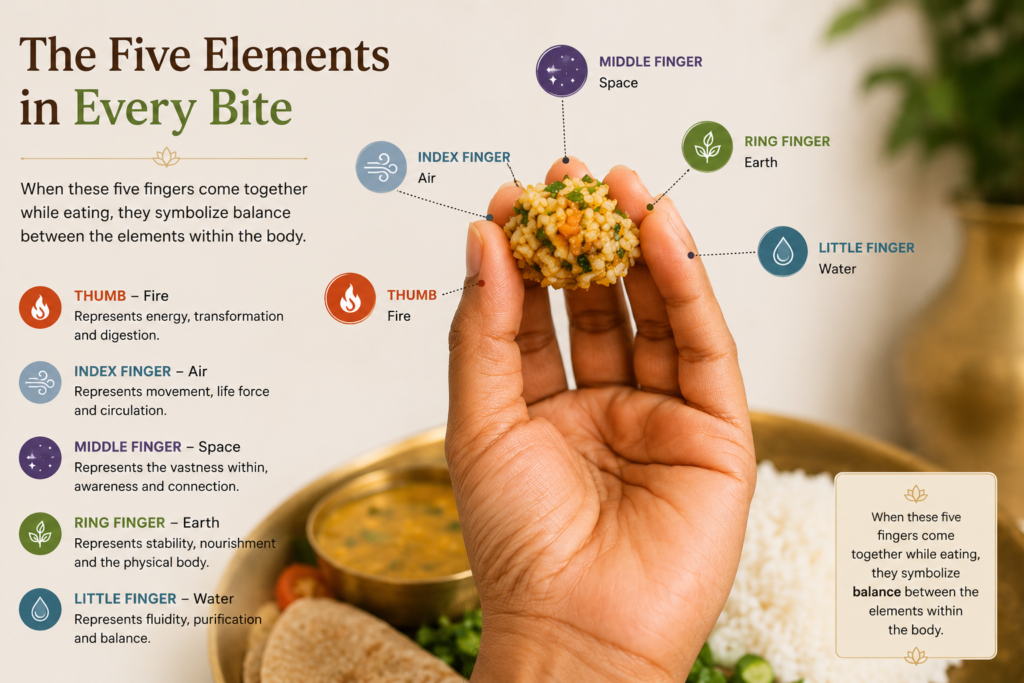
When these five fingers come together while eating, they symbolize balance between the elements within the body.
Whether or not one follows Ayurveda, eating with the hands creates a stronger connection with food. You feel its temperature, texture, and consistency before taking each bite. This sensory awareness prepares the brain for digestion even before the food enters the mouth.
Science Supports Mindful Eating
Modern research has shown that digestion begins before the first bite.
The sight, smell, and touch of food activate digestive enzymes and prepare the stomach for digestion. This is known as the cephalic phase of digestion.
When eating with your hands, multiple senses become involved:
- You see the food.
- You smell its aroma.
- You touch its texture.
- You naturally slow down.
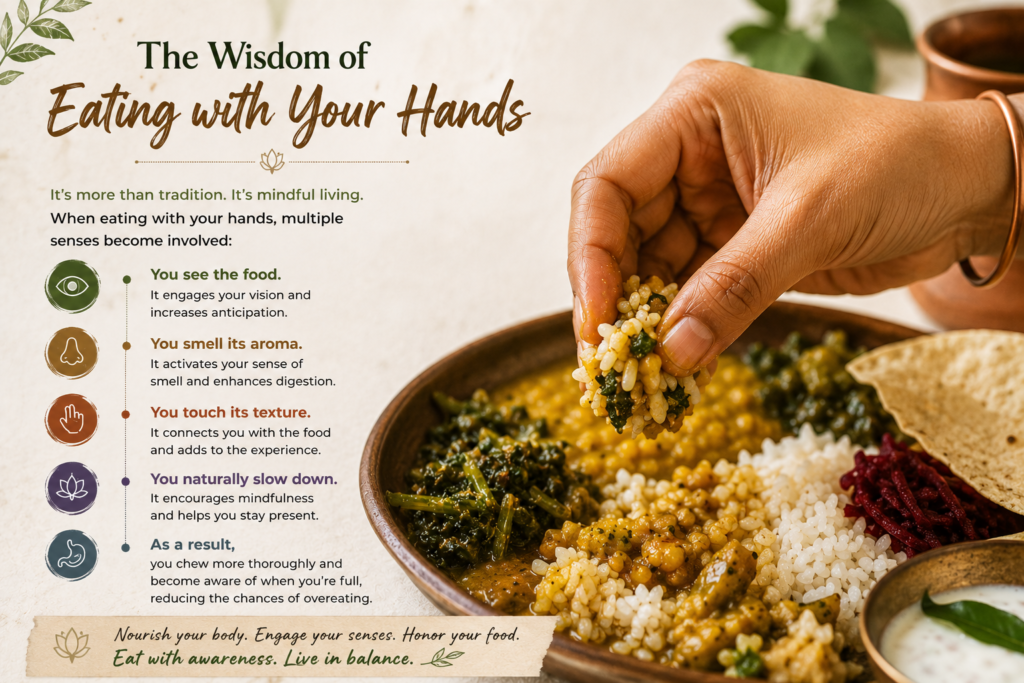
As a result, you chew more thoroughly and become aware of when you’re full, reducing the chances of overeating.
This explains why many nutritionists now recommend mindful eating practices that Indian traditions have followed for generations.
Sitting Down Encourages Better Digestion
Our busy lifestyles often lead to eating while walking, driving, or working.
When we rush through meals, digestion becomes less efficient because the body remains in a state of stress.
Sitting comfortably on the floor or at a table encourages relaxation. The nervous system shifts toward a calmer state, allowing the digestive organs to function more effectively.
The cross-legged position may also improve posture during meals and encourage slower eating, both of which contribute to healthier digestion.
Eating Slowly Helps You Eat Less
One of the biggest challenges today is overeating.
Fast eating doesn’t give the brain enough time to recognize fullness. It usually takes around 20 minutes for satiety signals to develop.
Eating with your hands naturally slows the process. You pick up smaller portions, chew more carefully, and enjoy each bite.
This simple habit may help with:
- Portion control
- Healthy weight management
- Better digestion
- Reduced bloating
- Improved satisfaction after meals

Food Becomes an Experience
Indian culture has always treated food with gratitude.
Before meals, many families offer a short prayer or simply express thanks. This small pause creates awareness and respect for the nourishment being received.
When eating with the hands, people become more connected to the meal itself instead of focusing on television or mobile phones.
This deeper connection transforms eating from an automatic habit into a meaningful daily ritual.
Ayurveda and Holistic Wellness
Ayurveda, one of the world’s oldest systems of natural health, teaches that digestion is central to overall wellness.
According to Ayurvedic principles, proper digestion influences:
- Energy levels
- Immunity
- Mental clarity
- Emotional balance
- Long-term health

Eating peacefully, sitting comfortably, and using the hands are considered ways to support digestive health naturally.
Although modern medicine explains these benefits differently, both approaches agree that mindful eating improves overall well-being.
Indian Wisdom Meets Modern Lifestyle
Today’s world values convenience, but convenience sometimes comes at the cost of health.
People often eat:
- While checking emails
- During meetings
- In front of the television
- While scrolling social media
These distractions reduce awareness and may lead to overeating.
Reintroducing small elements of Indian eating traditions can make meals healthier without changing what you eat.
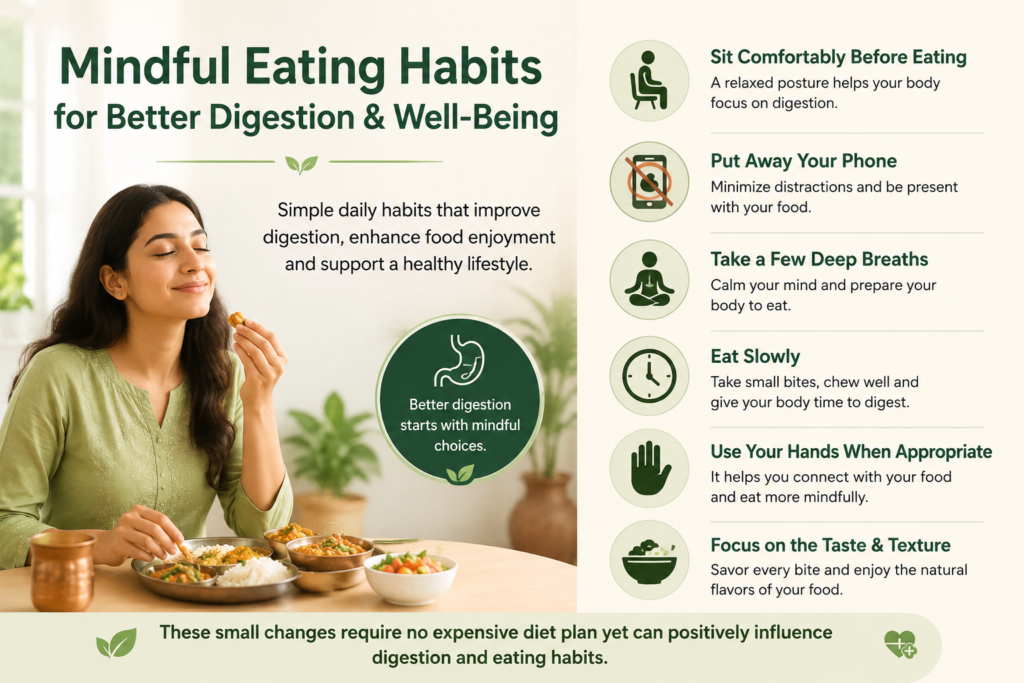
Simple habits include:
- Sit comfortably before eating.
- Put away your phone.
- Take a few deep breaths.
- Eat slowly.
- Use your hands when appropriate.
- Focus on the taste and texture of your food.

These small changes require no expensive diet plan yet can positively influence digestion and eating habits.
A Timeless Practice Worth Rediscovering
Ancient Indian traditions continue to inspire people around the world because they combine simplicity with mindfulness.
Sitting while eating and using your hands are not merely customs passed down through generations—they are practices that encourage presence, gratitude, and healthier eating habits.
As modern science continues to explore the connection between the brain, digestion, and mindful living, many aspects of Indian wisdom are finding new relevance.
In a world filled with distractions, perhaps the greatest lesson is this: slow down, be present, and truly experience your food.
That simple act may be one of the healthiest habits we can bring back into our daily lives.
FAQs
1. Why do Indians eat with their hands?
Eating with the hands enhances the sensory experience of food, encourages mindful eating, and has deep roots in Ayurveda and Indian tradition.
2. Is eating with your hands healthy?
Yes. When your hands are clean, it can promote slower eating, better digestion, and great awareness of portion sizes.
3. Why do Indians sit on the floor while eating?
Sitting cross-legged encourages relaxation, good posture, and mindful eating, which may support healthy digestion.
4. What does Ayurveda say about eating with your hands?
Ayurveda associates each finger with one of the five elements, symbolizing balance and mindful nourishment.
5. Does science support eating with your hands?
Yes. Touching food engages the senses, helping prepare the digestive system before eating begins.
6. Can mindful eating improve digestion?
Yes. Eating slowly and without distractions may improve digestion, reduce overeating, and increase meal satisfaction.
7. Can these traditions fit into modern life?
Absolutely. Simple habits like eating slowly, avoiding screens, and focusing on your meal can bring these timeless practices into everyday life.